

You've got questions about artificial flowers. We've got answers — clear, direct, and honest. Here's every question buyers ask us, answered in one place.
This guide is organized by the questions buyers search most frequently. Each answer is written to give you the information you need immediately, without fluff. Where a question deserves more detail, we've linked to the full article that covers it in depth.
Are artificial flowers worth it?
Yes — for most home decorators, event planners, and business owners, artificial flowers deliver significantly better value than fresh flowers over any meaningful time period. A quality artificial flower display costs a fraction of an equivalent fresh arrangement annually, requires no maintenance, and looks just as beautiful on day 365 as day one. The only scenario where fresh flowers clearly win is when natural fragrance is a non-negotiable priority.
Read more: Artificial Flowers vs Fresh Flowers: Full Comparison

How long do artificial flowers last?
Quality artificial flowers from a reputable supplier last indefinitely when properly cared for. A silk or PVC flower display stored correctly and cleaned periodically can look excellent for five, ten, or twenty years. The primary degradation factors are sustained direct UV exposure (which fades colors over time) and physical damage. With basic care — dusting regularly and keeping out of prolonged direct sunlight — your displays will look the same in three years as they do today.
Read more: The Complete Guide to Cleaning and Caring for Artificial Flowers
What are the most realistic artificial flowers?
The most realistic artificial flowers are made from high-grade soft PVC (for waxy-petaled flowers like orchids and anthuriums), premium polyester silk (for full-petaled flowers like peonies, roses, and ranunculus), and Real Touch latex blends (the highest realism tier, used by professional event stylists). For home buyers, high-quality silk and PVC flowers from Perma-Petals are indistinguishable from fresh flowers in most real-world settings and in photographs.
Read more: Bulk Faux Peonies and Ranunculus: The Designer Look at a Fraction of the Cost

What is the difference between silk and PVC artificial flowers?
Silk flowers (most commonly made from polyester) have a soft, fabric-like petal texture that suits full, layered blooms like peonies, roses, and ranunculus. They're the most versatile material and the best choice for indoor home and event decor. PVC flowers have a slightly firmer, more translucent petal that accurately replicates waxy real-flower petals — orchids, anthuriums, and calla lilies look most realistic in PVC. PVC is also more weather-resistant and easier to clean than fabric alternatives.
Read more: Silk vs. PVC vs. Polyester: Which Artificial Flowers Actually Look Real? Buyer’s Guide
How do you make fake flowers look real?
The most impactful steps are: reshape every stem before displaying (bend the wire core to create natural curves); add greenery to every arrangement; use opaque or partially filled vases to conceal stems; vary flower heights rather than displaying all stems at the same level; and place arrangements in natural indirect light rather than under direct overhead lighting. Material quality is the foundation — even the best styling won't make a low-quality plastic flower convincing.
Read more: Real Touch Artificial Flowers: Tulips, Roses, and Orchids Buying Guide
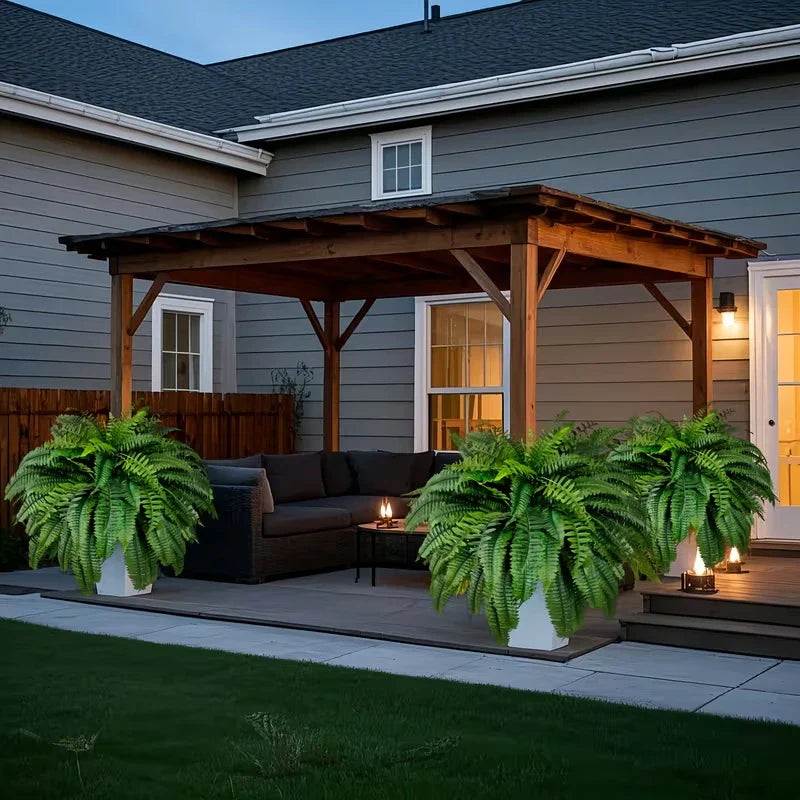
Can artificial flowers go outside?
Some artificial flowers are specifically designed and rated for outdoor use, while others are indoor-only. Outdoor-rated artificial flowers use UV-resistant materials that resist sun fading, weather-tolerant construction, and rust-proof wire cores. UV-rated options from Perma-Petals include specific ranges suitable for patios, window boxes, balconies, and garden beds. Standard silk and polyester indoor flowers will fade and deteriorate if left outside in direct sun and weather — always check the product's outdoor suitability before outdoor placement.
Read more: 5 Best Outdoor Artificial Flowers That Actually Last (UV-Resistant and Bulk-Priced)
Do artificial flowers fade in sunlight?
Yes — sustained direct sunlight causes color degradation in most artificial flower materials over time, typically over months to years rather than days to weeks. UV-rated outdoor flowers resist fading significantly better than standard indoor flowers. For indoor displays, placing flowers in bright indirect light rather than directly in front of south-facing windows eliminates most UV fading risk. The darker and more saturated the color, the more gradually fading occurs — lighter colors and whites tend to be less affected.
Read more: 5 Best Outdoor Artificial Flowers That Actually Last (UV-Resistant and Bulk-Priced)

How many artificial flowers do I need for a wedding?
As a general reference: each guest table centerpiece requires 20–30 stems; a bridal bouquet requires 30–45 stems; a 4x4 ft flower wall requires 100–150 stems; a ceremony arch requires 80–120 total stems. For a 100-guest wedding with 10 tables, a ceremony arch, and a bouquet, a realistic total is 400–550 stems across all elements. Always add 15% buffer to calculated totals. See our complete wedding quantity guide for a detailed breakdown by display type and guest count.
Read more: How Many Artificial Flowers Do You Actually Need for a Wedding? (With a Free Quantity Guide)
Are artificial flowers cheaper than real flowers?
Yes — dramatically so over any meaningful time period. A fresh flower centerpiece costs $40–120 per week when replaced regularly. An equivalent artificial flower centerpiece from Perma-Petals costs $15–40 once, indefinitely. For a single event, artificial flowers cost roughly 30–50% of an equivalent fresh flower budget from a professional florist. For ongoing home displays, the annual savings are substantial — often $500–2,000 per year depending on display scope.
Read more: Real Flowers vs. Artificial Flowers: The Honest Comparison Every Buyer Needs to Read

How do you clean artificial flowers?
For light dust: use a hairdryer on the cool setting, soft brush, or compressed air. For deeper cleaning of silk and polyester flowers: submerge gently in cool soapy water, swish gently, rinse thoroughly, and air-dry upright. For PVC and plastic flowers: wipe each petal with a slightly damp cloth and buff dry. Never use hot water, alcohol-based cleaners, or abrasive materials on any artificial flower type. Clean kitchen displays every 3–4 weeks; bedroom and living room displays every 6–10 weeks.
Read more: The Complete Guide to Cleaning and Caring for Artificial Flowers
Can you buy artificial flowers in bulk?
Yes — bulk purchasing is the most cost-effective way to buy artificial flowers and delivers significantly lower per-stem pricing than individual retail purchases. Perma-Petals specializes in bulk artificial flower orders for home decorators, event planners, wedding buyers, and businesses. There is no minimum order quantity, and pricing tiers reward higher volume orders with progressively lower per-stem costs. Bulk ordering is available year-round across the full range of silk, PVC, polyester, and faux-dried stems.
See more: Shop Perma-Petals

What are the best artificial flowers for home decor in 2026?
For living rooms and statement displays: full peonies or roses in neutral tones. For bedrooms: single orchid stems or soft ranunculus. For kitchens: lavender, daisies, or small rose bunches. For bathrooms: single orchid stems in slim vases. For entryways: architectural orchids or mixed statement arrangements. For boho and modern aesthetics: faux pampas grass, dried-look eucalyptus, and decorative grasses. For all-round versatility: eucalyptus greenery, which works in every room, style, and arrangement type.
Read more: Room by Room: How to Style Artificial Flowers in Every Space of Your Home
Are artificial flowers good for weddings?
Yes — artificial flowers have become mainstream in wedding styling for practical reasons: they're available in any color any time of year, they can be ordered and prepared weeks in advance, they don't wilt on the day, they photograph identically to fresh flowers, and they cost significantly less than a comparable fresh flower budget. Many couples use artificial flowers for large-scale elements like flower walls, table centerpieces, and ceremony arches, while using fresh flowers for bouquets where natural fragrance is desired.
Read more: Top Artificial Flowers for Luxury Wedding Designs

Where can I buy cheap artificial flowers in bulk?
Perma-Petals is a specialist bulk artificial flower supplier offering quality silk, PVC, and polyester stems at bulk pricing with no minimum order requirement. Our pricing tiers reward volume purchasing, making us the most cost-effective source for anyone buying 20+ stems at a time. We stock consistently across all flower types and colors year-round, ship fast, and stand behind every order with a satisfaction guarantee.
See more: Shop Perma-Petals full collection

How do I arrange artificial flowers in a vase?
Start by adding greenery stems to create the shape and volume of your arrangement. Insert your largest, most dominant blooms at varying heights in the center. Fill with smaller accent flowers between the primary blooms. Add any trailing elements last. Use odd numbers of each flower type for a natural look. Reshape every stem before inserting — natural curves and varied angles are what separates a styled arrangement from an out-of-the-box display. Total time: 10–15 minutes for a first arrangement.
Read more: 5 Stunning DIY Artificial Flower Centerpieces You Can Build in Under 30 Minutes
Shop the full Perma-Petals range — every flower type, every color, bulk pricing, fast shipping.


